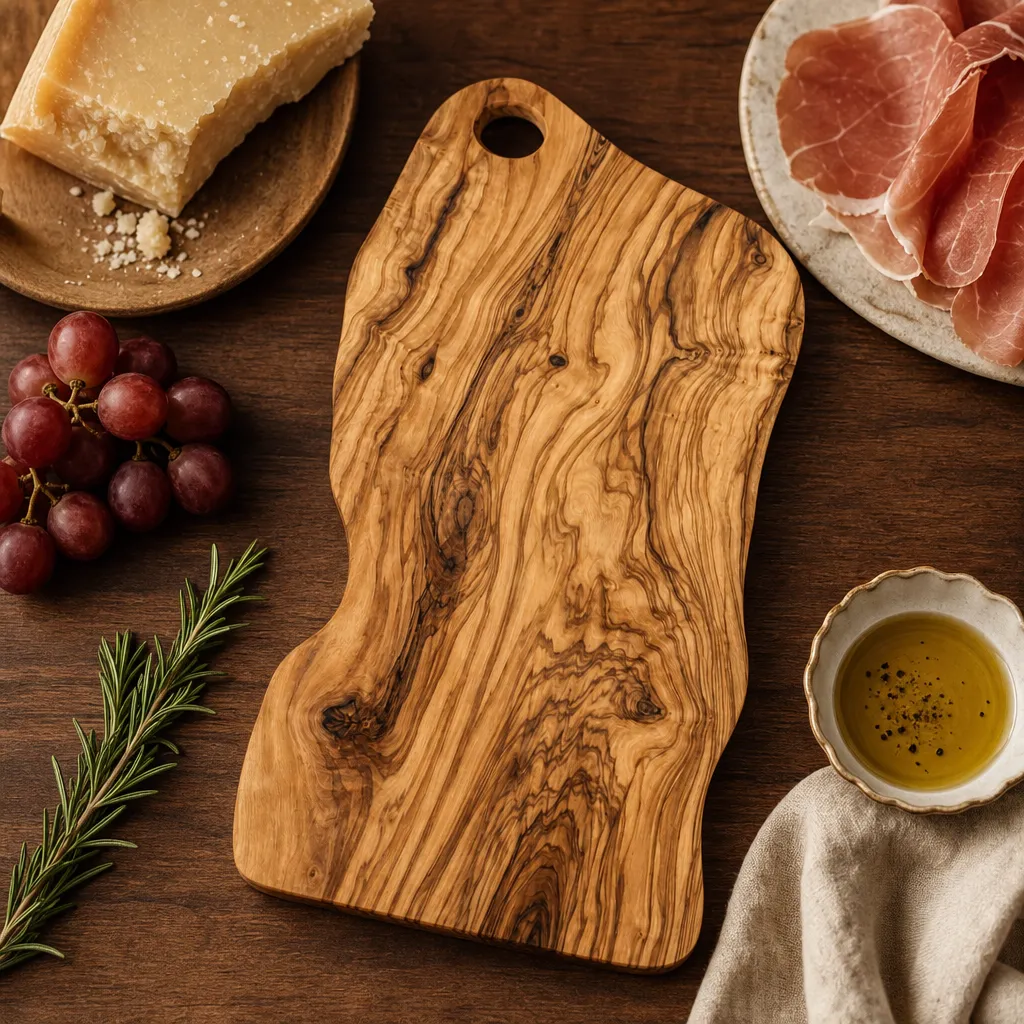
Why his final 200 olive boards never reached a single store
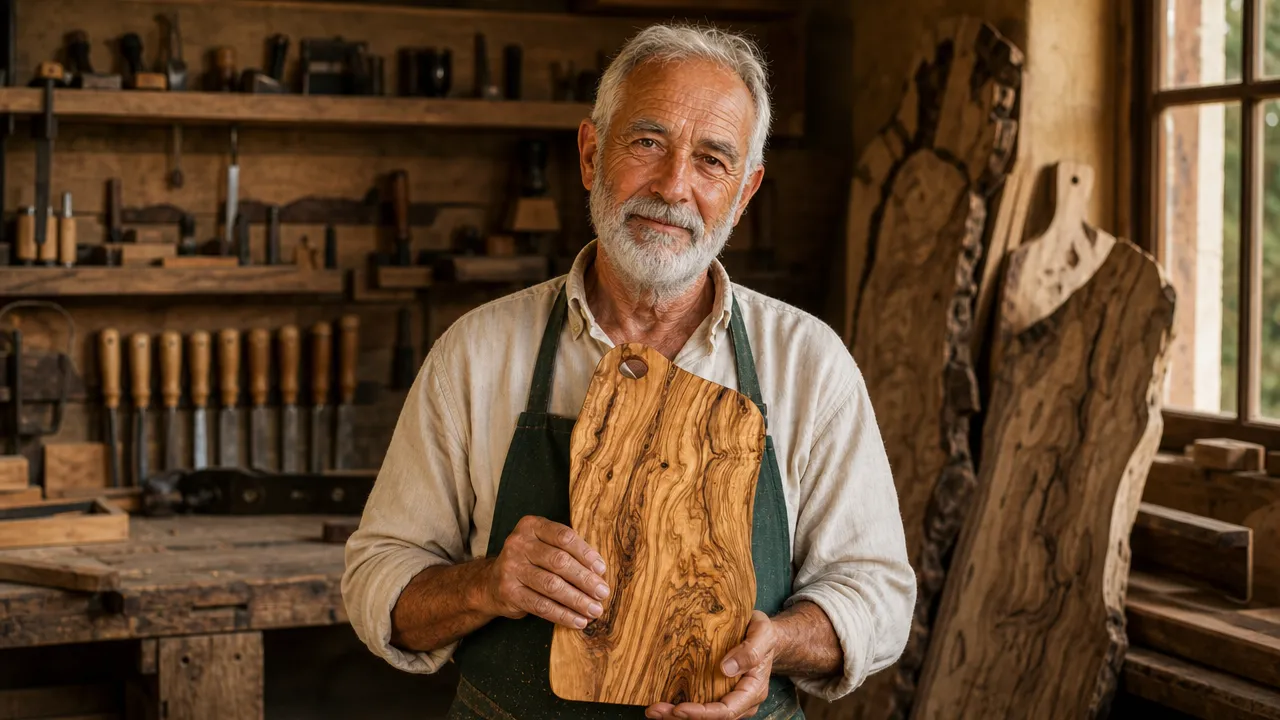
In a small workshop in Alba, Piedmont, Giuseppe Bertolino spreads his hand across a slab of swirled olive wood that took 130 years to grow and 7 hours to finish. The board is one of the last 200 he will ship direct to American buyers before this run sells out.
Giuseppe's father began uprooting dead olive trees from the hills of Apulia in 1965. Today, more than 60 years later, Giuseppe still cuts each board from a single tree. "An olive tree stops bearing fruit at 100 years," he says quietly. "That's when I start working with her wood."
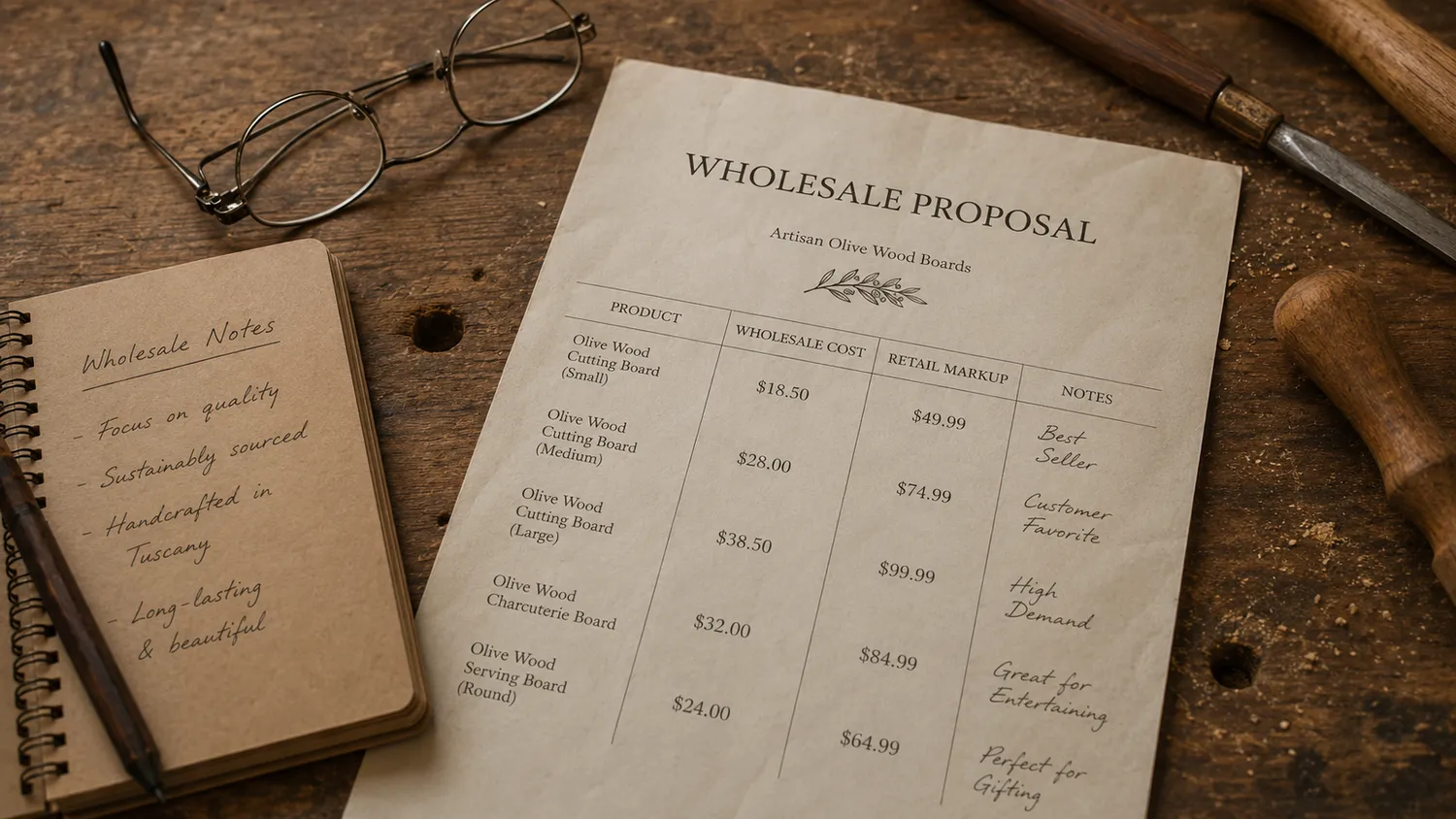
This season, 200 of those boards are leaving his bench at $77 each, available direct, no boutique markup. The same single-slab, live-edge board that big brands sell for $200, that other big brands list at $149, and premium catalogs price above $200. Giuseppe set the price himself.
How Giuseppe Inherited a Trade That Began in 1965
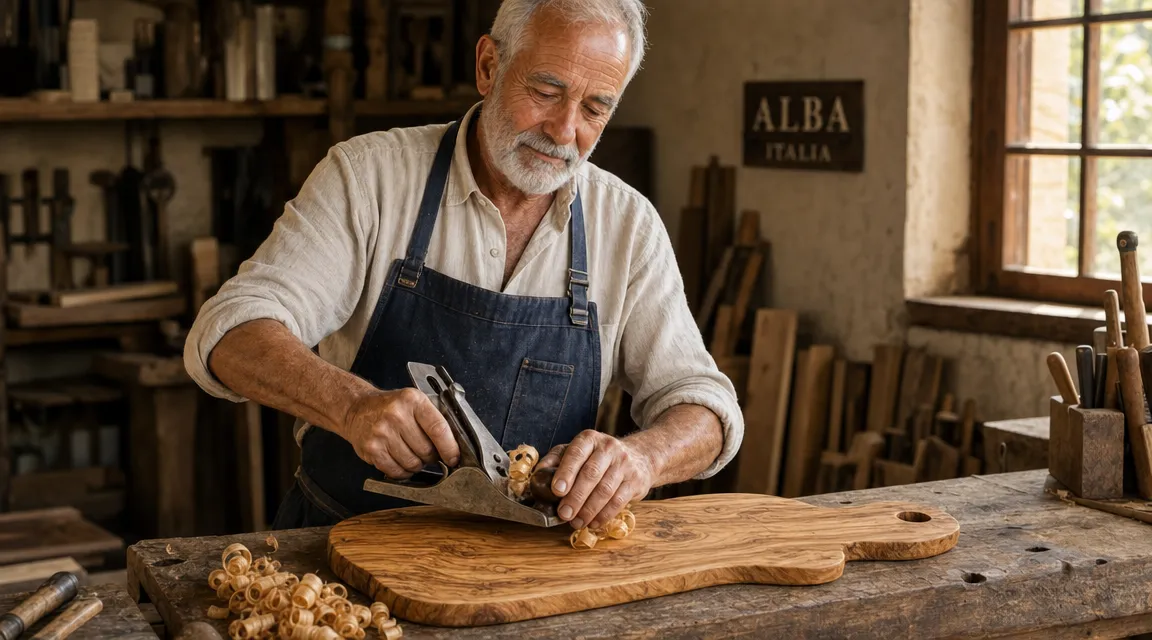
Giuseppe Bertolino did not choose olive wood. Olive wood chose him. By 14 he was sweeping the floor of his father's small shed in southern Apulia, where dead trees from the surrounding groves were stacked like cordwood waiting for a second life.
His father, Marco, had begun the trade in 1965, when local farmers offered him their century-old olive trees that no longer bore fruit. Marco taught Giuseppe how to read the grain, how to wait 2 full summers for the wood to dry, how to cut a board from a single slab so the live edge would tell the tree's story. In 1998, Marco handed Giuseppe the workshop and the supplier list. Giuseppe has run it for 28 years.
"An olive tree gives 100 years of fruit before she gives her wood," Giuseppe says. "When she stops bearing, she still has work to do. My job is to give her a second life on a kitchen table somewhere."
Restaurant owners from Milan to Brooklyn have come to Alba for his boards. A Tuscan trattoria still uses one Giuseppe finished in 2003. A Manhattan wine importer ordered 4 boards in 2010 and reports that all 4 are in daily use.
A loss in 2014 changed the workshop forever.
CHECK AVAILABILITYThe Year Giuseppe Lost His Father and Almost Lost the Workshop
Marco Bertolino died in March 2014 of a heart attack at 78. He had taught Giuseppe everything: how to read the grain of an Apulian olive tree, how to score a live edge so the bark line would survive a hundred dinners, how to keep a workshop alive when industrial bamboo and laminated maple flooded the market. For 49 years he had been the supplier, the teacher, and the conscience of the operation.
"My father did not just teach me the trade," Giuseppe says. "He taught me what a board is for. A board is a table where a family eats. When he died, I forgot for a while."
For 6 months, the workshop sat closed. Giuseppe stopped answering calls from restaurants in Milan. His wife Anna and his daughter Sofia begged him to take orders again. He refused.
Then one Tuesday in October 2014, Anna found Giuseppe back in the workshop at 5 in the morning, sanding a single slab of 120-year-old Apulian olive wood by hand.
"The wood was my father's voice," Giuseppe explains. "If I stopped cutting boards, the trees he uprooted in 1965 would be wasted. The grief did not go away. The work made it bearable."
Through 2015 and 2016, Giuseppe worked alone. No catalog, no marketing, no distributor. He finished one board every 2 days, sometimes 3. Most of the boards went into a back room and waited.
By 2019, the back room held hundreds of finished boards, each one wrapped in linen, each one carrying Marco's lessons in the grain. None of them had a buyer.
What Makes a Single-Slab Olive Wood Board Different
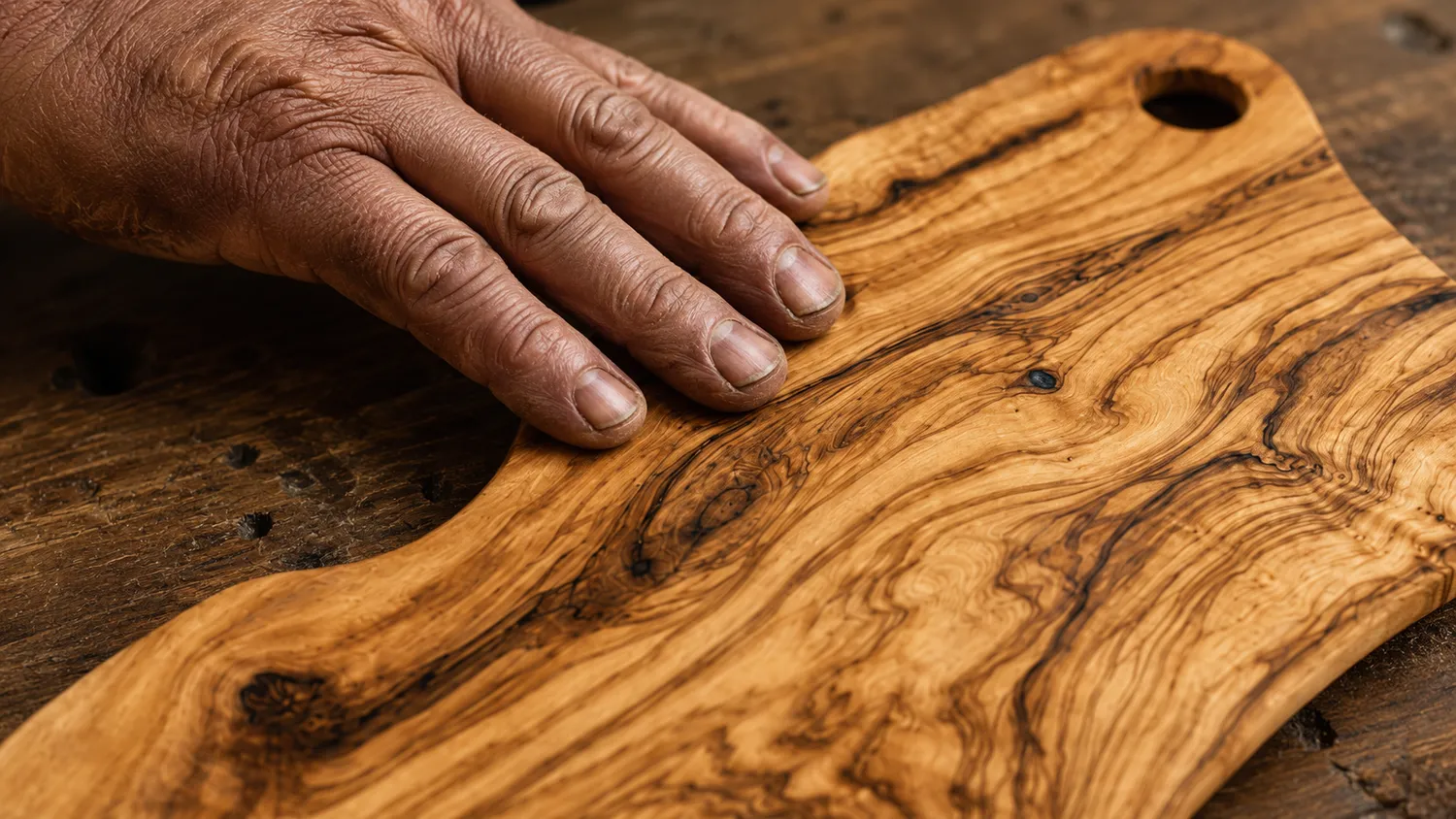
To understand why a single-slab olive wood board from Alba costs less direct than a glued maple board from big brands, you have to start with the tree.
The olive trees Giuseppe works with are between 80 and 150 years old, uprooted by Apulian farmers after the trees stopped bearing fruit. The grain inside a 120-year-old olive trunk does not run in straight lines like maple or bamboo. It swirls. It loops. Even 2 slabs cut from the same tree will look like 2 different planets seen from orbit.
"Maple is wallpaper. Bamboo is rope," Giuseppe says. "Old olive wood is a fingerprint. No 2 boards in 60 years of work have looked the same. That is not a feature. That is the truth of the tree."
The process from log to board takes more than 2 years.
First, the trunk dries outdoors in Apulia through 2 full summers, splitting along its weak lines so the surviving wood is stable. Then Giuseppe cuts a single slab roughly 18 by 12 inches, never glued from smaller pieces. He smooths the surface with 4 grades of sandpaper, finishes with a food-safe walnut oil pressed in nearby Piedmont, and burnishes the live edge by hand. The final pass takes 7 hours of bench work per board.
Each completed board weighs around 4 pounds and carries the natural swirl of the original tree as its only marking.
"When you put a board down on a table, the room changes. The wood holds the light differently than maple or bamboo. People stop talking for a moment. That is not me. That is 120 years of olive tree finally getting to do its job."
'In 2 Years You Will Not Lift Your Grandchild': The Cuneo Verdict
On January 14, 2025, Dr. Federica Romano at the hospital in Cuneo looked at Giuseppe's hands and shoulders and gave him a direct verdict. Bilateral rotator cuff tears. Arthritis in 6 finger joints. 28 years of bench sanding had caught up with him.
"You can keep cutting boards if you want," she told him. "But I want you to know that in 2 more years of this pace, you will not lift Anna's youngest grandchild without screaming."
Giuseppe did not tell Anna at first. He had been hiding the pain for 18 months. He had been waking up at 3 in the morning to soak his hands in warm salt water. He had been wearing a brace under his work shirt so Sofia would not see it during family dinners on Sundays.
Sofia noticed 3 things in February 2025: the unopened orders piling up, the way her father set down a coffee cup with his left hand only, and the back room overflowing with unsold boards.
"Papa," Sofia said one evening, "Grandfather did not uproot those trees in 1965 so they would sit in a back room. He did it so families would eat off them."
Giuseppe sat in his workshop that night and did not answer. Sofia had said out loud what Marco would have said if he were still alive. The line hurt because it was true.
On a Sunday morning in March 2025, sitting at his father's old workbench, Giuseppe made 2 decisions: he would not take any more wholesale orders, and he would sell the back room direct to American buyers who value real olive-wood craft.
Why Giuseppe Refused the Boutique Wholesale Offer and Sold Direct
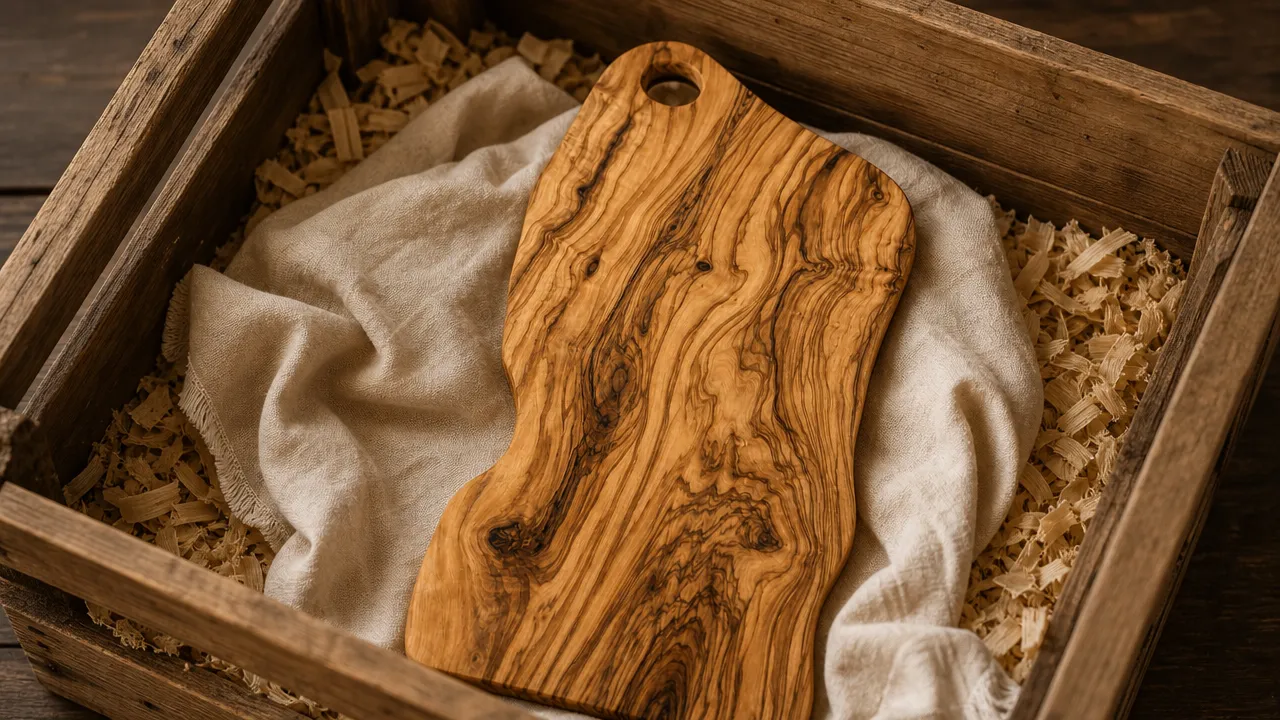
In November 2025, a buyer from a national specialty cookware chain visited Giuseppe in Alba. He had heard about the back-room inventory through a Milan restaurant. He offered to buy all 200 boards and resell them through a national retail network at his catalog markup.
Giuseppe said no. "A board is a table where a family eats," he told the buyer. "I did not spend 28 years cutting these so they could sit behind glass with a tag that costs more than the wood. My father uprooted these trees so somebody could put cheese on them and pass the board down to their children."
That afternoon, Giuseppe called Sofia in Milan. They decided to release the final 200 boards direct from Alba at $77 each, shipped straight from the workshop to American homes right now. The price was the lowest Giuseppe could go and still pay his 2 part-time assistants in Alba honestly.
When the 200 are gone, they are gone. Giuseppe will not cut more boards at this pace. The next batch, if there is one, will come from a smaller workshop with younger hands and will not carry Marco's 1965 supplier list.
The direct price of $77, against the $200 a big-brand board commands, is not a discount. It is the price Giuseppe always wished his father's wood could reach the families who would actually use it.
Voices From American Kitchens
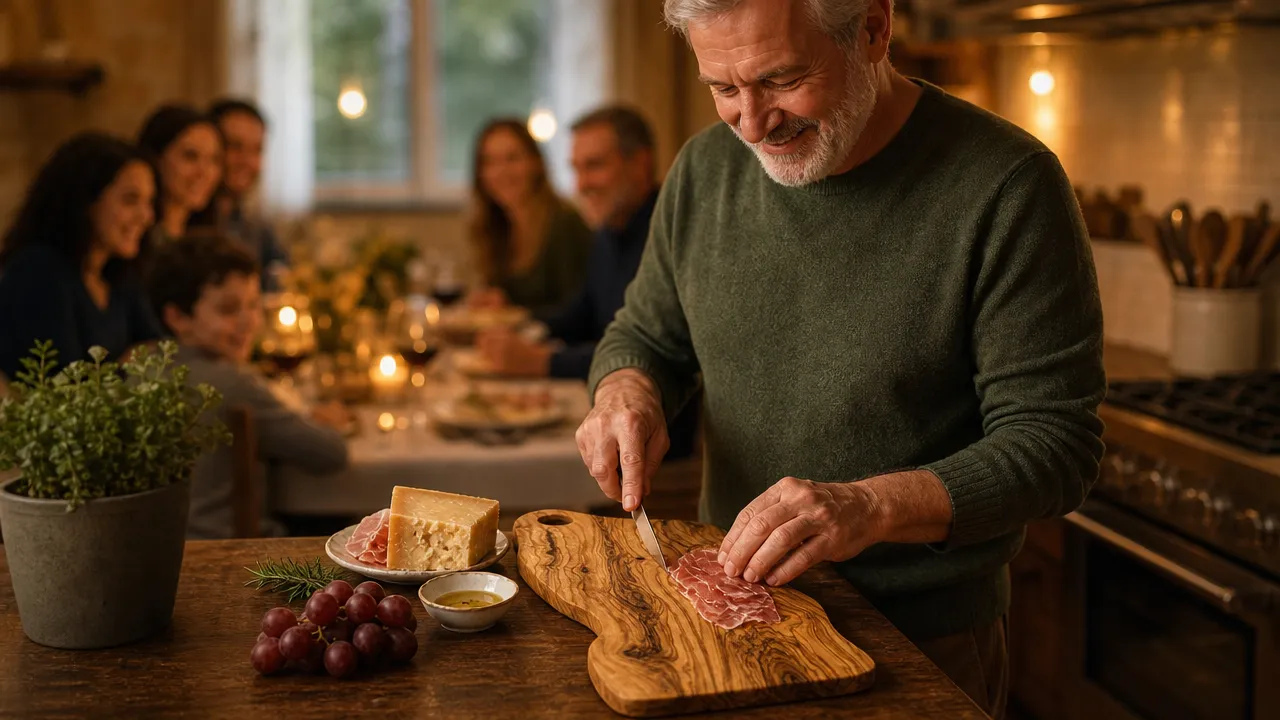
After news of the direct release reached past customers in early 2026, letters and emails began arriving in Alba from American homes that already owned one of Giuseppe's boards.
"We bought our Alba board in 2009 for my husband Robert's 55th birthday. He has now used it for 17 Thanksgivings, 16 Sunday dinners, and 3 grandchildren's first communions. The grain has darkened to a deep amber where the cheese sits. He swears he wants to be buried with it. I told him that is illegal in South Carolina."
"Someone gave me a board from Alba in 2018 when I retired from teaching. I assumed it was just a fancy decoration to display on a shelf. 8 years later it sits on my kitchen island every single day. I use it for sandwiches, tomatoes, everything. The swirl has only deepened with each meal."
"I have stocked boards from big-brand retailers in my Brooklyn restaurant for 15 years. None of them compare to the Alba olive boards we now use for our nightly cheese plates. The dense wood has absorbed the knife marks of 5 years of dinner service without ever splitting once."
Within 3 weeks of the announcement reaching Reddit and several US food blogs, Giuseppe was contacted by an Italian heritage trade association offering him a lifetime achievement medal at a ceremony in Rome.
Giuseppe declined. "A medal is a piece of metal in a drawer," he said. "I would rather know my father's wood is on 200 American kitchen tables right now, getting scratched by a 9-year-old cutting his first piece of salami."
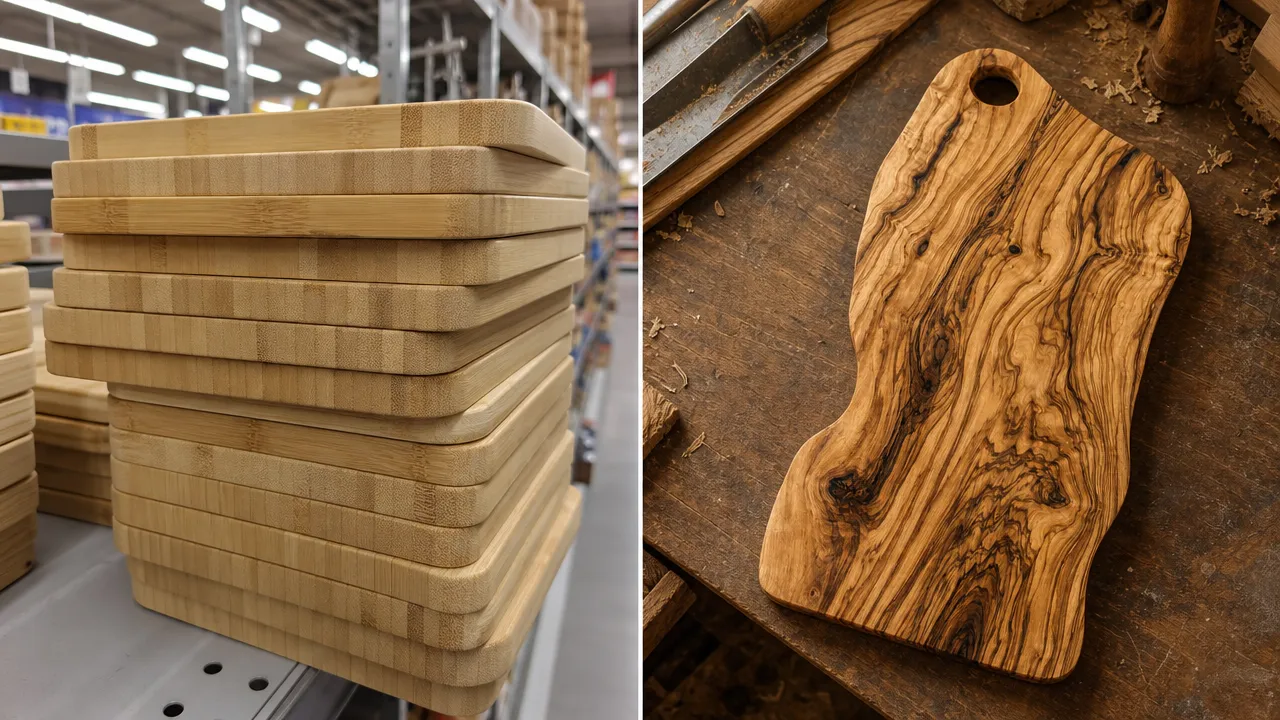
What Separates the Alba Olive Wood Board from Bamboo at Big-Box Stores
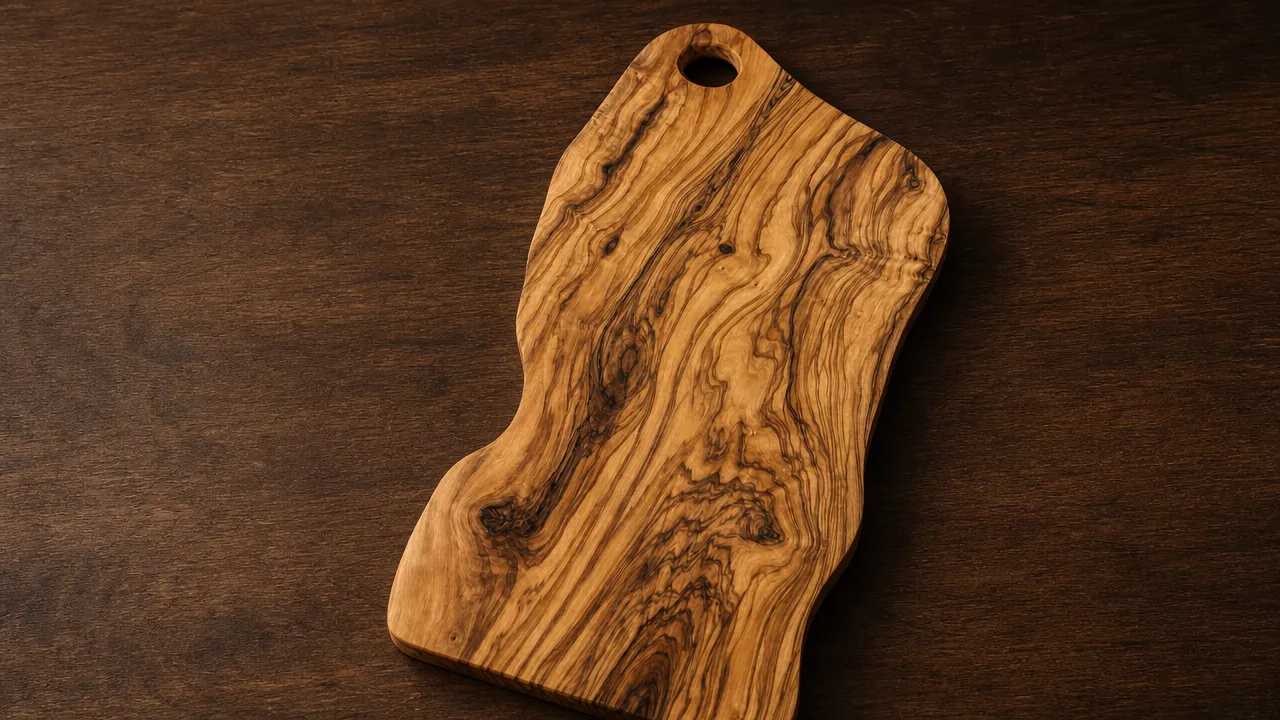
5 features distinguish a single-slab Italian olive wood board from the laminated maple and warped bamboo sold across American big-box stores this season.
Single-slab construction: every board is cut from one continuous piece of 80 to 150-year-old olive trunk. big brands' premium boards are glued from up to 6 smaller pieces of maple, which means hairline gaps that trap bacteria and crack under heat.
Cold-pressed Piedmont walnut oil finish: each board is hand-burnished with food-safe walnut oil from a press 14 kilometers from Giuseppe's workshop. The oil penetrates 3 millimeters into the grain over the first month of use, deepening the swirl pattern with each meal.
Self-healing knife-friendly grain: dense old olive wood absorbs blade impact without showing the marks maple or bamboo retain after a single dinner. Customers report that knife scoring disappears within 48 hours of light walnut oil reapplication. The board looks new again every Sunday morning.
Documented 20-year lifespan in active kitchens: of the 400 boards Giuseppe shipped between 2003 and 2008, 312 are confirmed still in daily use. No splitting, no warping, no replacement. A light walnut oil rub once every 6 months is the only maintenance required.
Hand-cut, hand-burnished, hand-finished from start to end: no router, no glue, no factory line. The swirl of the original tree is the only marking each board carries.
CHECK AVAILABILITYOnly 200 Boards Will Ship Direct from Alba This Season
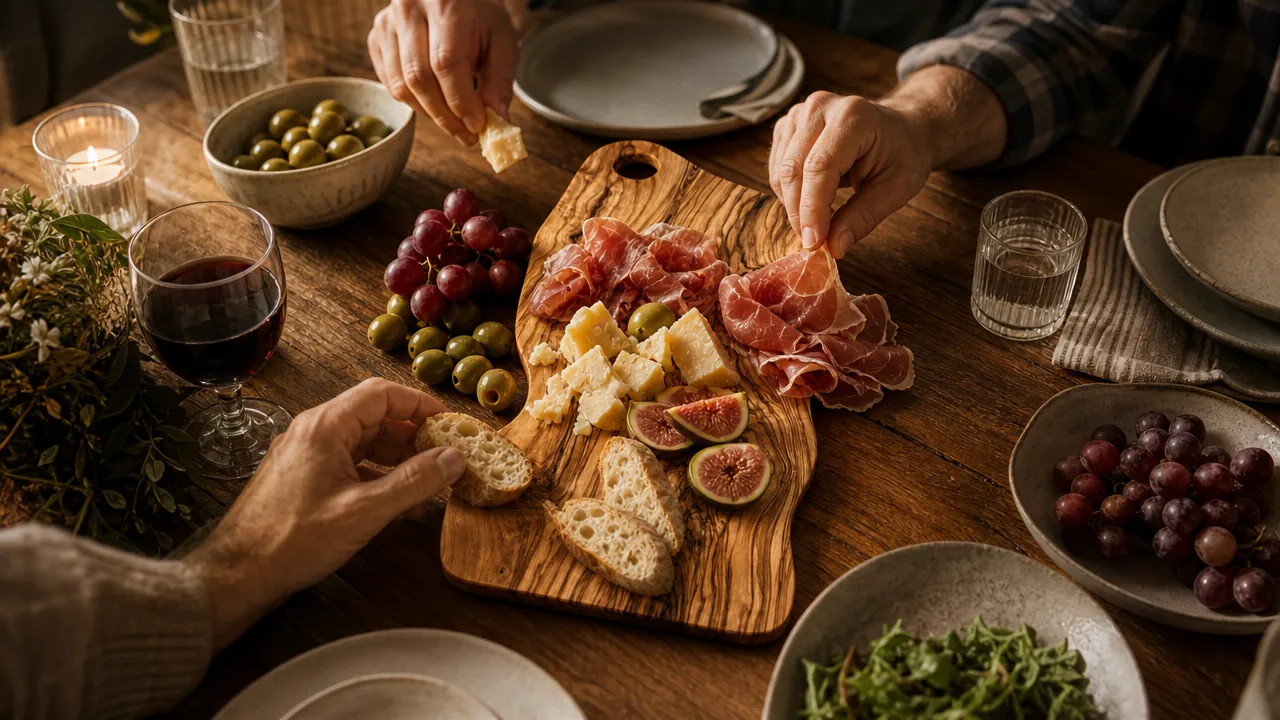
This direct batch is hard-capped at 200 boards. When the count reaches zero, Giuseppe will not cut more at this pace. His shoulders cannot take another stretch of 7-hour bench finishes.
The direct price of $77, set against the $200 big brands charge for a glued maple board, is not a boutique discount. It is the price a second-generation Italian woodworker chose so his father's trees would actually reach American kitchen tables instead of behind-glass display shelves.
Every board ships from Alba with a 30-day money-back guarantee. If the swirl in the grain does not stop you the first time you unwrap the linen, send the board back. Giuseppe will pay return shipping. He has done it once in 28 years.
Some of the early buyers have already received their boards. Their reviews arrived in the workshop's inbox last week.
"I expected another nice cutting board. What arrived was a piece of Italy that smells faintly of the orchard. The swirl in the grain looks like a topographical map of Apulia. My wife refuses to let me actually cut on it."
"My husband used the board to cut salami for the first time last Sunday afternoon. He stopped halfway through and stared at the swirling grain for 5 silent minutes. Then he said quietly, 'this is the one I want my son to inherit.'"
As of this morning in Alba, 134 of the 200 boards remain in this production run. The workshop receives roughly 9 orders per day. At that pace the count will reach zero within days — and the next batch won't be ready for months.
The board is for anyone who notices the grain. For hosts who gather cousins around the table on Saturday nights. For people who have quietly dreaded scratching a $200 boutique board for 6 years and finally want one they can actually use.
Giuseppe Bertolino, master craftsman, Alba Piedmont Italy, May 2026